- Latest News
Dominic Hill on Waiting for Godot
Our Artistic Director, Dominic Hill, shares some insights into our five-star production of Waiting for Godot.
I first saw Waiting for Godot as a teenager in the late 1980s at Oxford Playhouse.
I remember thinking I’d never seen anything like it and I found it mesmerising, confusing and disturbing.
In that cast was a certain Matthew Kelly as Vladimir – very good of course, but perhaps far too young to play the part.
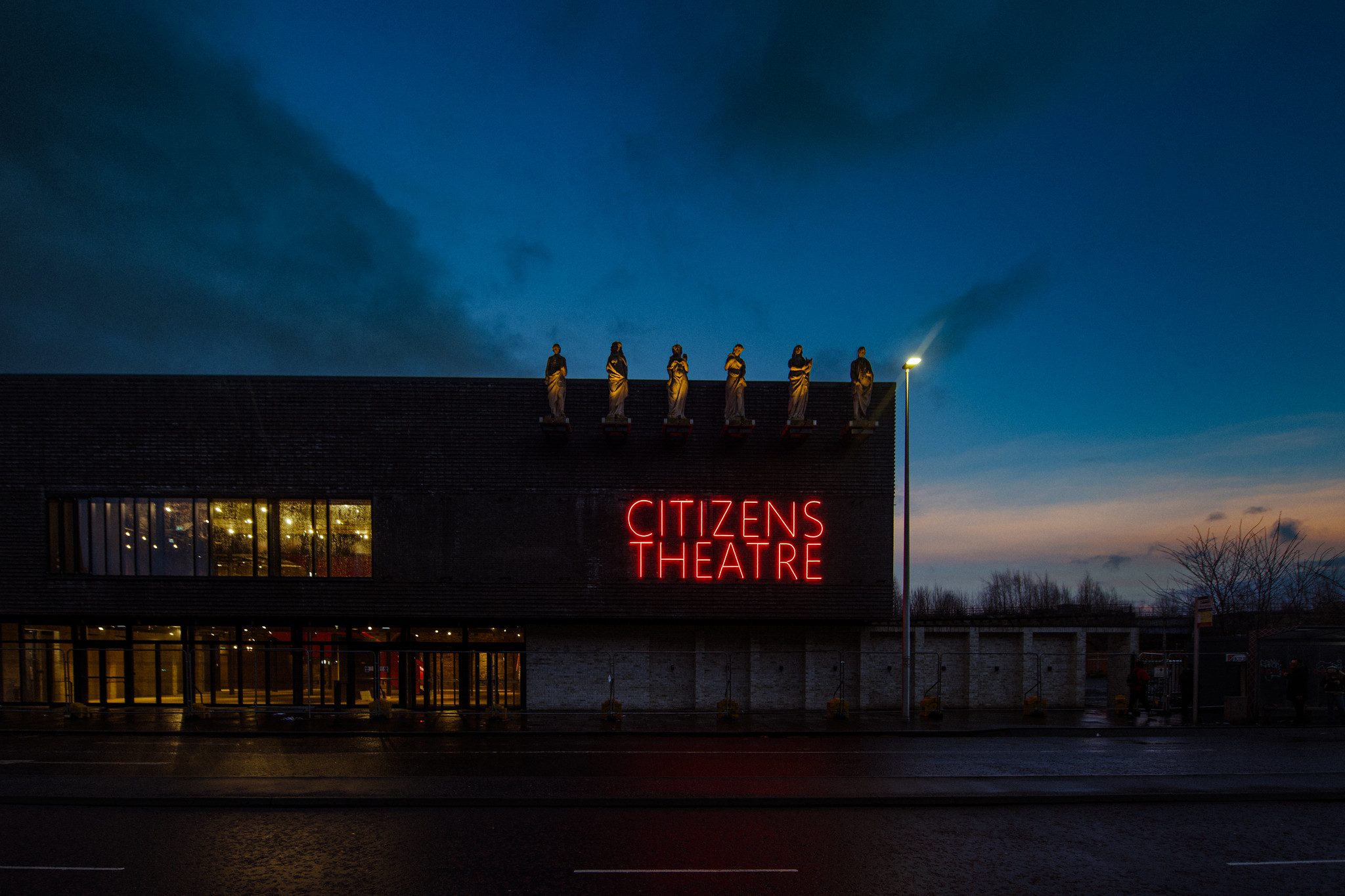
So now it is 40 years later, and Matthew is here in our first season at the new Citz, once again appearing in Godot – at a more appropriate age – and with his old friend and Citz stalwart George Costigan playing opposite him.


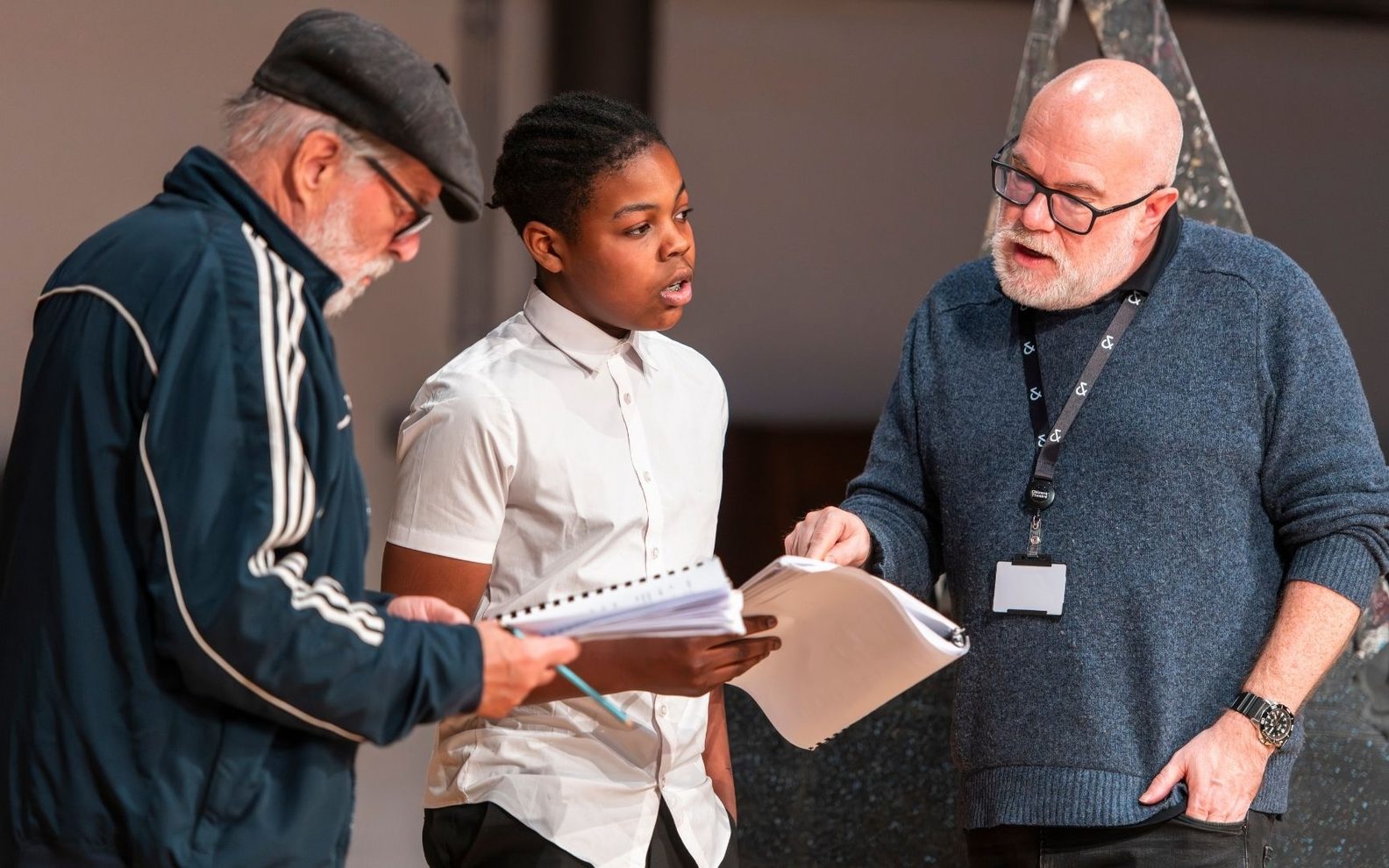
This relationship is at the heart of the play and Matthew and George’s 50 years of friendship feeds our exploration of the characters during rehearsals. Their knowledge and trust of each other mirror those of Vladimir and Estragon, and often and hilariously as we talk of ailments – a creaking hip or shoulder, a dysfunctional prostate, memory failings – the world of the play bleeds into everyday life. The play is about so many things, but what makes it work is the relationship between these two characters. They bicker, abuse each other, get angry, help each other, laugh and cry. They threaten to leave, but ‘always come crawling back’. But above all they are two people who have lived a life together, and at the end of it have only each other to cling to.
Waiting for Godot is often described as a two hander. But the impact of the other two main characters – Pozzo and Lucky – are fundamental to the action of the play. They are as reliant on each other as Vladimir and Estragon, in a twisted and terrifying way. It is still shocking to me to encounter the image of one man dragging another (his ‘slave’) by a rope around his neck, but it is also scary how contemporary the narcissistic ramblings and ranting of a man who has acquired a certain power can seem. Pozzo is a bully but wants to be loved. He is powerful but needy. ‘Is everybody looking at me?’ he demands. I think we can all recognise such dangerous characteristics in leaders today.
Beckett wrote this play in 1948. His own experience of working for the resistance in rural France, on the run from the Gestapo, impoverished and waiting for the end of the war seem to be in its pores and its images remain as prevalent and resonant 70 years after its writing. But for all that, like so many of Beckett’s plays, Waiting for Godot defies easy definition. Its meaning is what each and every audience member make of it. And as I sit watching run-throughs in the rehearsal room, that meaning shifts and changes daily. And yes, I still find it, 40 years on, mesmerising, confusing and disturbing.
Perhaps darker. But unforgettable and important.
I hope it can have that impact on you too.
Waiting for Godot runs at the Citizens Theatre until Saturday 14 Mar before touring to Liverpool Everyman & Playhouse and Octagon Theatre Bolton.