- Participate
Meet Tom Piper, 1984 Designer
Our Education Officer, Indra Wilson, caught up with 1984 Designer Tom Piper to talk about how he brought the world of the play to life through set, costumes and design. What does it take to turn the world of 1984 from a book into a real stage?
What does a Designer do in a theatre production, and what was your journey into becoming a theatre designer?
The designer creates the visual world of the play, responsible for the set, props and costumes of the actors, all helping to tell the story of the play and bring the characters to life. This comes out of discussions with the director, bringing references, making sketches and then a scale model to explore the ideas together. I began doing student drama, building all my own sets and then went to art school for a post-grad qualification, before working as an assistant for Peter Brook’s production of the Tempest in Paris. I did a lot of fringe theatre work before beginning to get roles in larger theatres. My first job in Scotland was a Tron Panto! I have been working with Dominic Hill for over 25 years, and we have created 18 shows together.
What were your initial thoughts when you first approached the world of 1984?
It is a well-known story, or at least people know a lot of the tropes: Big Brother, thoughtcrime, Room 101, etc., but I needed to work from the playwright Chris Hannan’s version to serve that text, while being aware of the book. One of the interesting aspects of our production is that we see Orwell the writer at the beginning of the play struggling to type the book while in hospital near Glasgow for TB. So the design has to be able to suggest that hospital feel and be able to transition into the world of 1984. I became interested in the story being a sort of fever dream of Orwell in his hospital bed, linking as many of the elements in the world of 1984 back to things we have seen in the hospital.
How did the themes of 1984 (particularly power, surveillance, control and oppression) influence your design choices?
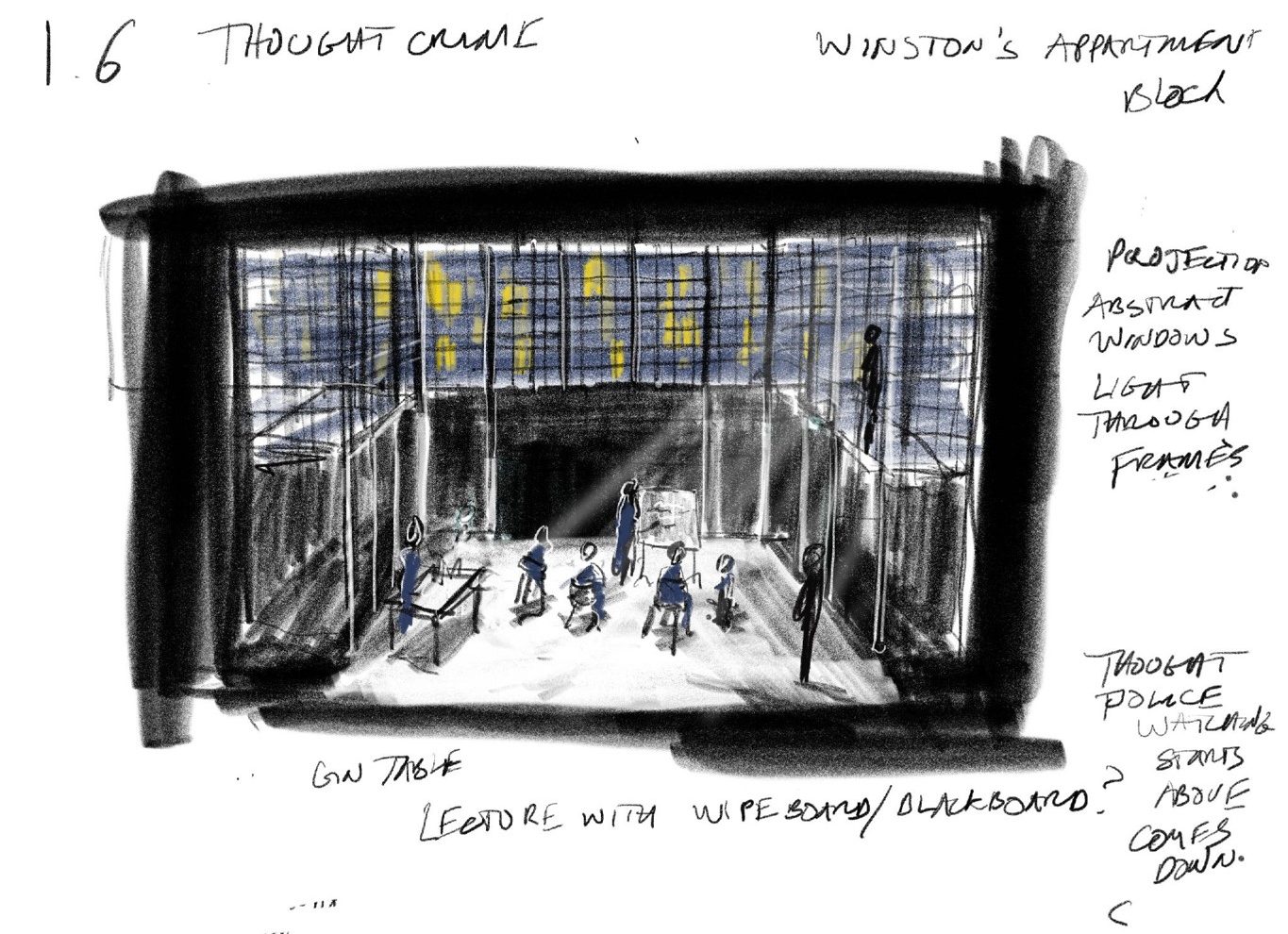
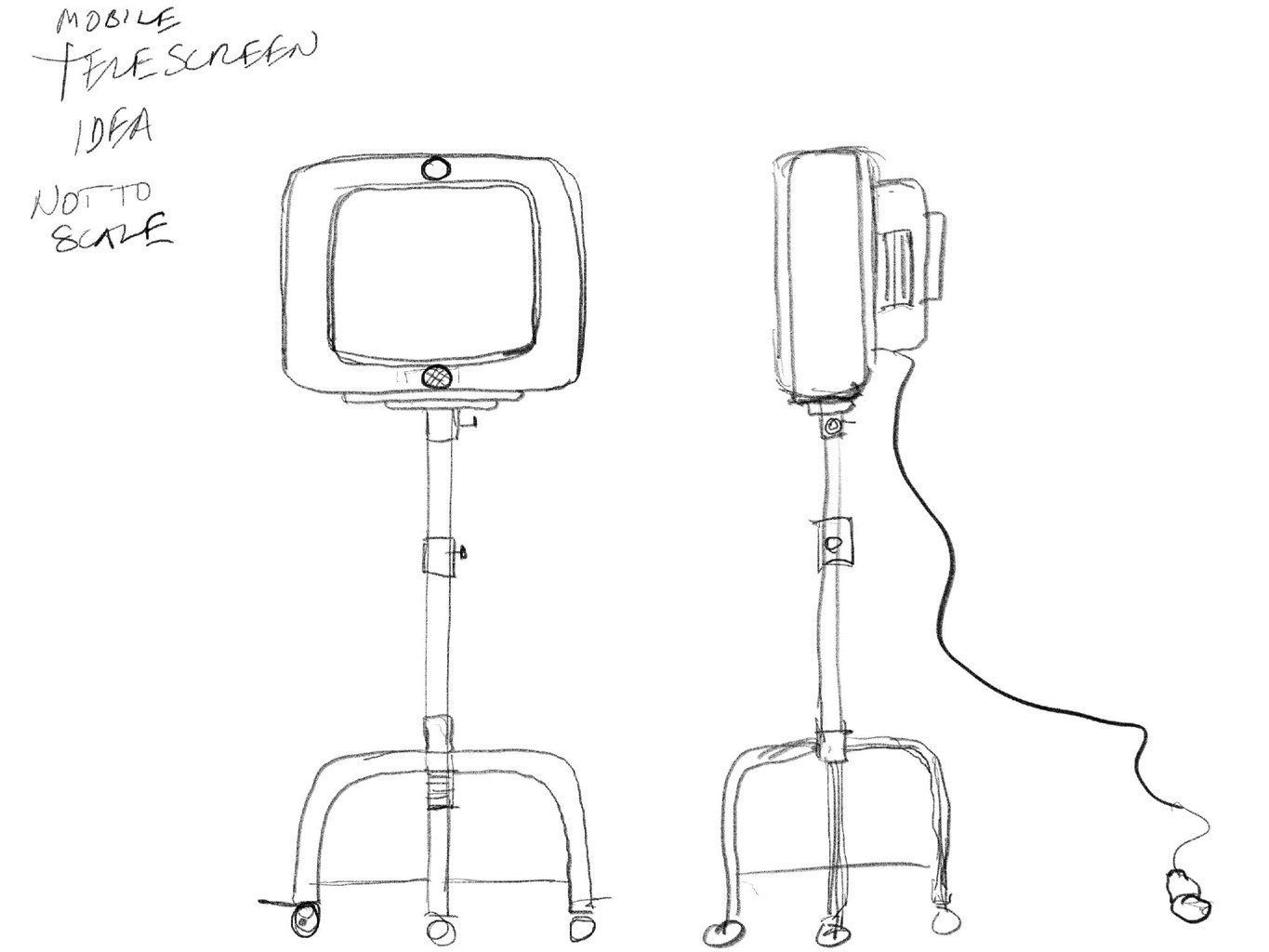
We were interested in the performative aspect of totalitarian regimes where everything is staged as an act of theatre, from the 2 minute hate to the fake antique shop that Winston is lured into and entrapped; the very location is a piece of theatre created by the Party to cement their total control over the people. There is no objective reality in this world. We are putting on a stage play, so there is an inherent artificial quality to that too. So we looked at the way on film, soundstages, sets are built as fragments of reality, which are seen against all the technology of lighting that space,e and the braces supporting the walls are all visible. The audience is continually aware of the sets and the way the main structure is held up with scaffolding; we see all the props waiting in the wings to be used. We also glimpse the actors watching the show they are making. I want all the surveillance tech to come out of the world that Orwell was writing in, so it is 1940’s technology of radios, typewriters, etc. that we have adapted to make the workstations and surveillance screens; 1984 is in fact very like 1948. There is an upper level to the space which we use for the thought police to observe the room below, heightening the sense of containment.
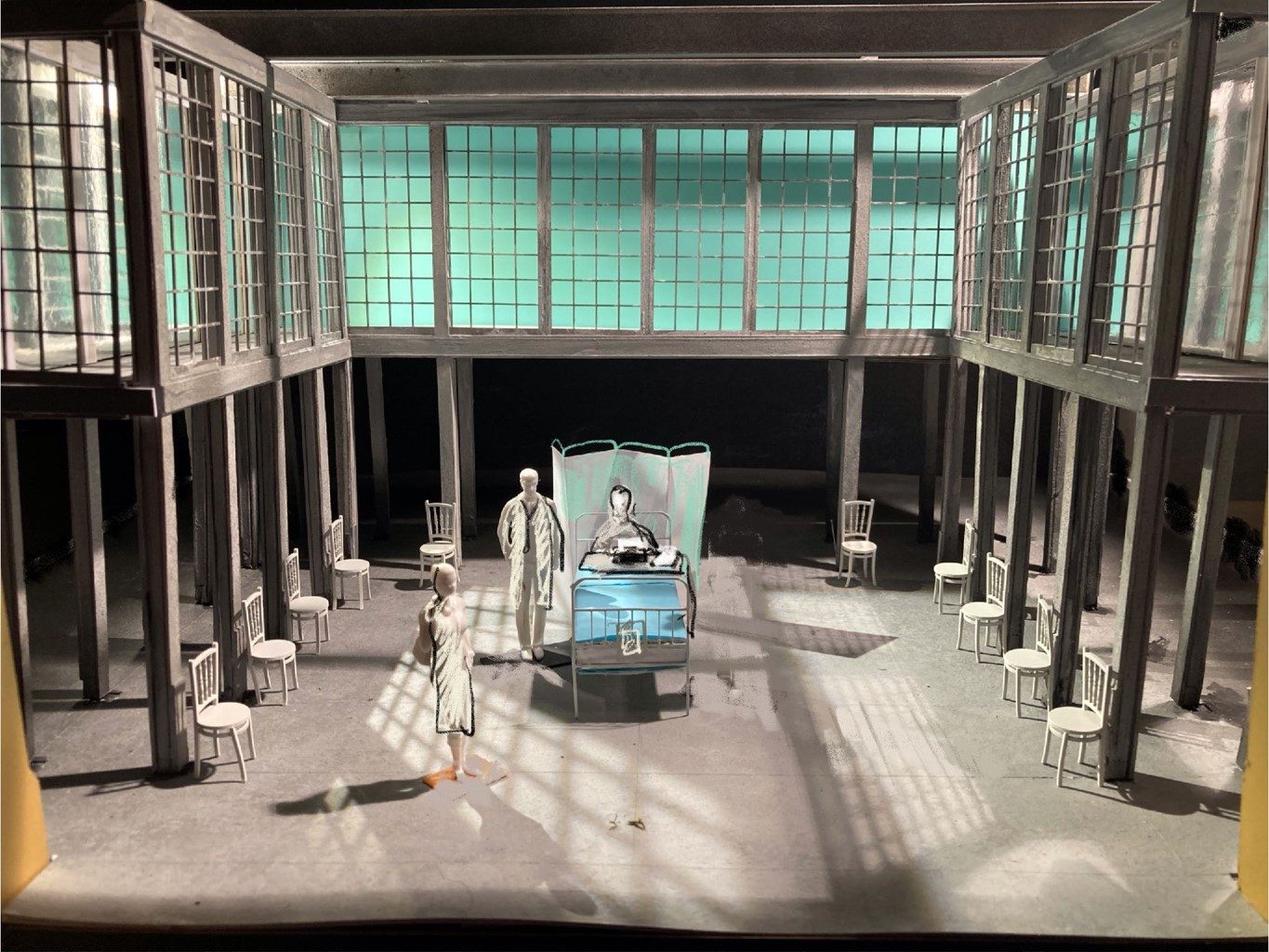
Selection of Tom’s designs
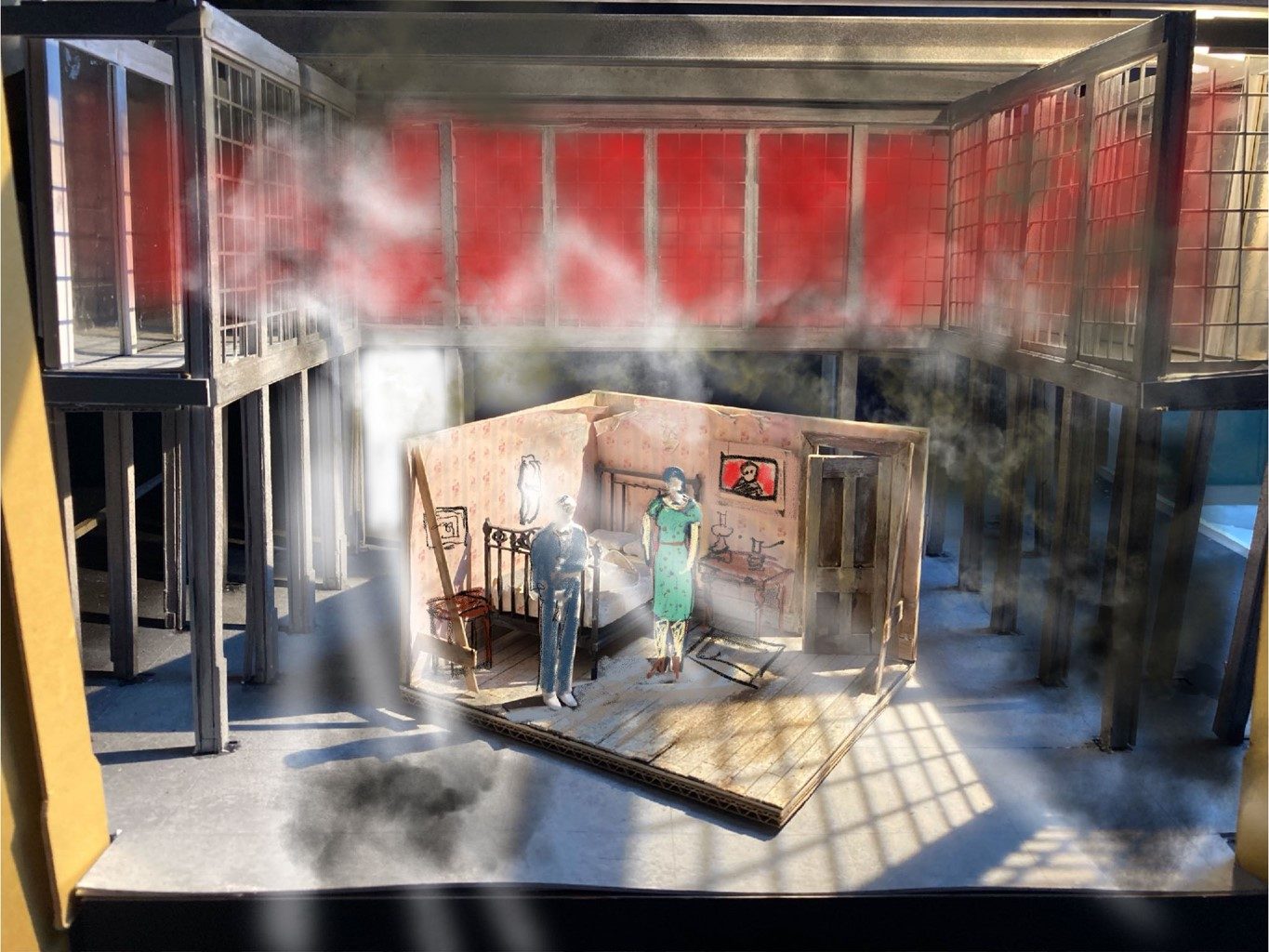
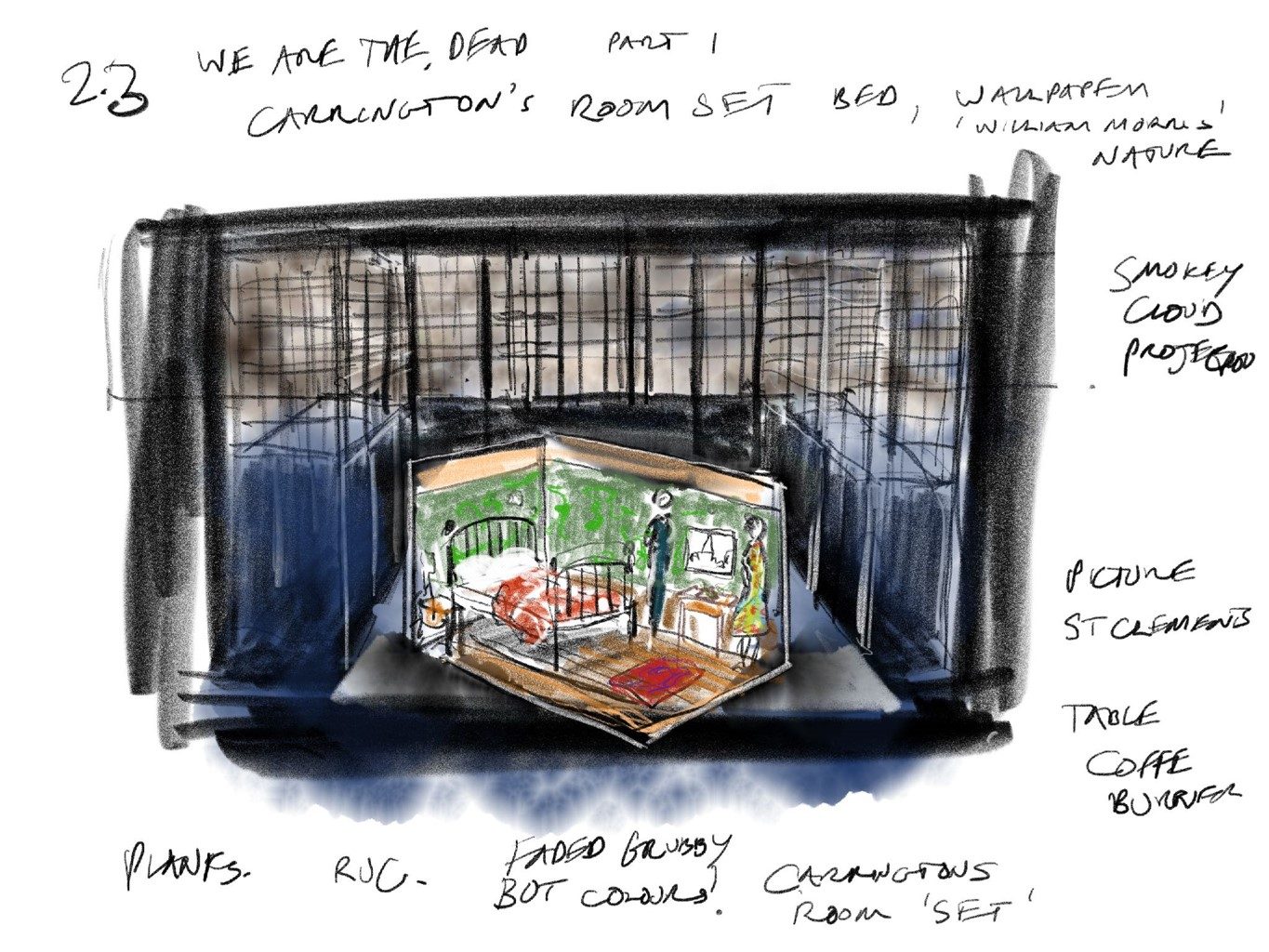
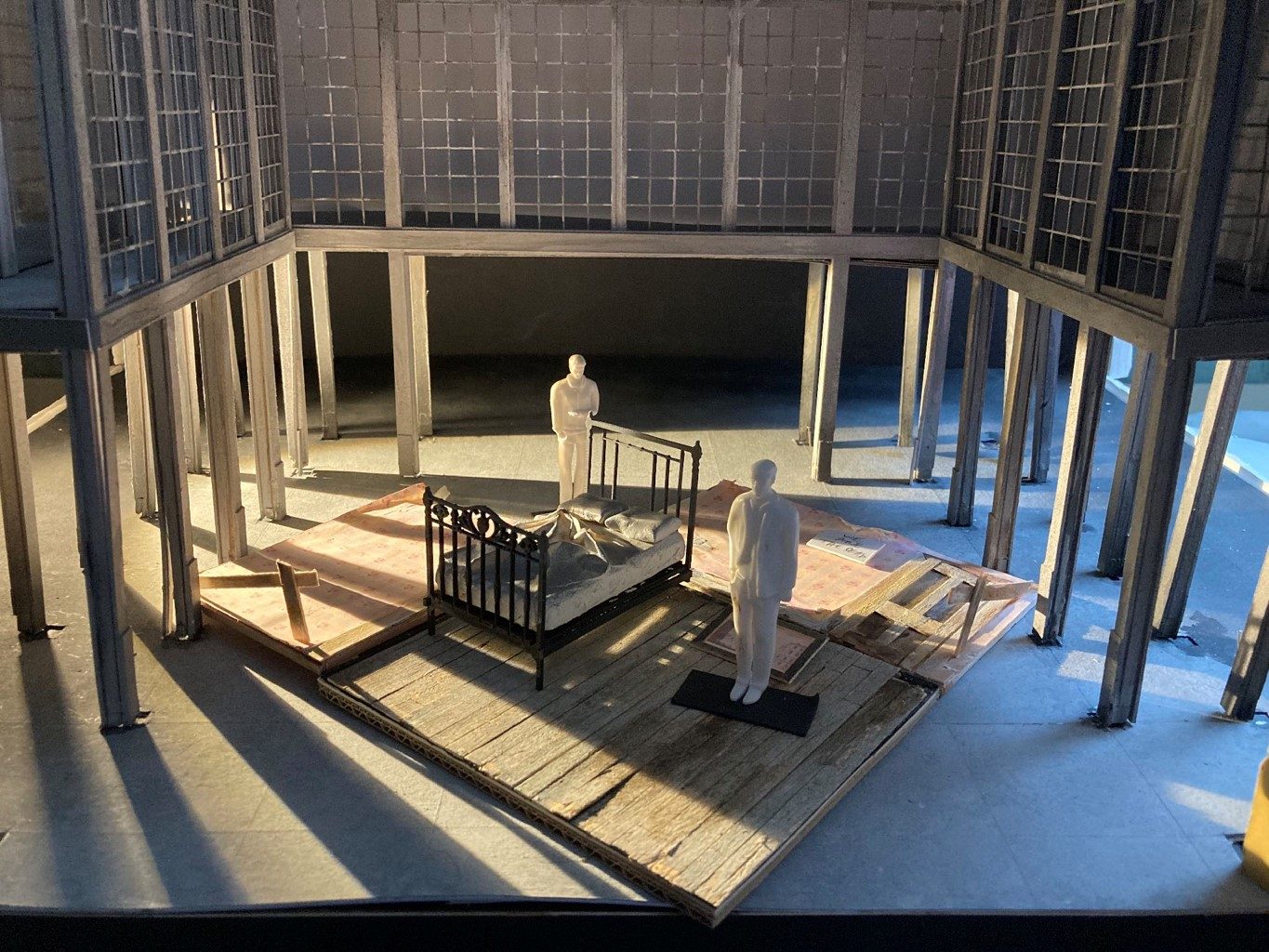
Were there particular materials, colours, textures or objects that were important to the design? What did they communicate to the audience?
The windows of a large institution are the main design element, painted dark grey and distressed. The world of 1984 is one of real shortages and decay, much like the soviet union of the mid-twentieth century. There is a deliberate absence of colour. I am also trying to feed the world of the hospital in the Play, especially in the second-half Ministry of Love scenes where all the props come from the hospital world.
How did you work with the director and other members of the creative team, such as the AV/Video Designer, to create one overall visual world?
The whole process is highly collaborative, from the early conversations with the director to working with Heather Scott, the video designer and Lizzy Powell, the lighting designer, to bring together the looks for the piece. I do initial sketches and a storyboard based around the model and share them with the team. They bring their own research and ideas and develop them through the technical rehearsals when we put it all together.


Were there any particular challenges in designing 1984 for the stage? How did you overcome them?
It flows very quickly from location to location, so the design has to be as fluid as possible. We use the company to move everything around in a choreographed manner, working with Emily-Jane Boyle, our movement director.
Is there a particular moment or design element in the production that you think is especially important?
Spoiler alert! The windows, which frame the space at high level, all lower to make the lower space into a prison cell when we go to the Ministry of Love!
What do you think theatre design can communicate to an audience without the actors having to say anything?
Theatre design allows the audience to engage their imaginations to help create the world of the play; these worlds can be built from fragments, props, and the suggestion of character a costume gives. It doesn’t need to be naturalistic, and indeed it is impossible in a play like this to realise every location. So within the central framework of the set we conjure up the different locations through arrangements of chairs, beds, etc.
Back to 1984 education page
The 1984 education pack is here to help you dig a little deeper into 1984 and the choices behind the production. Head back to the main page to explore more.