1984 Education: Lighting Design
When you watch a play, you might not always notice the lighting. But lighting can completely change what we see, how we feel and where we look.
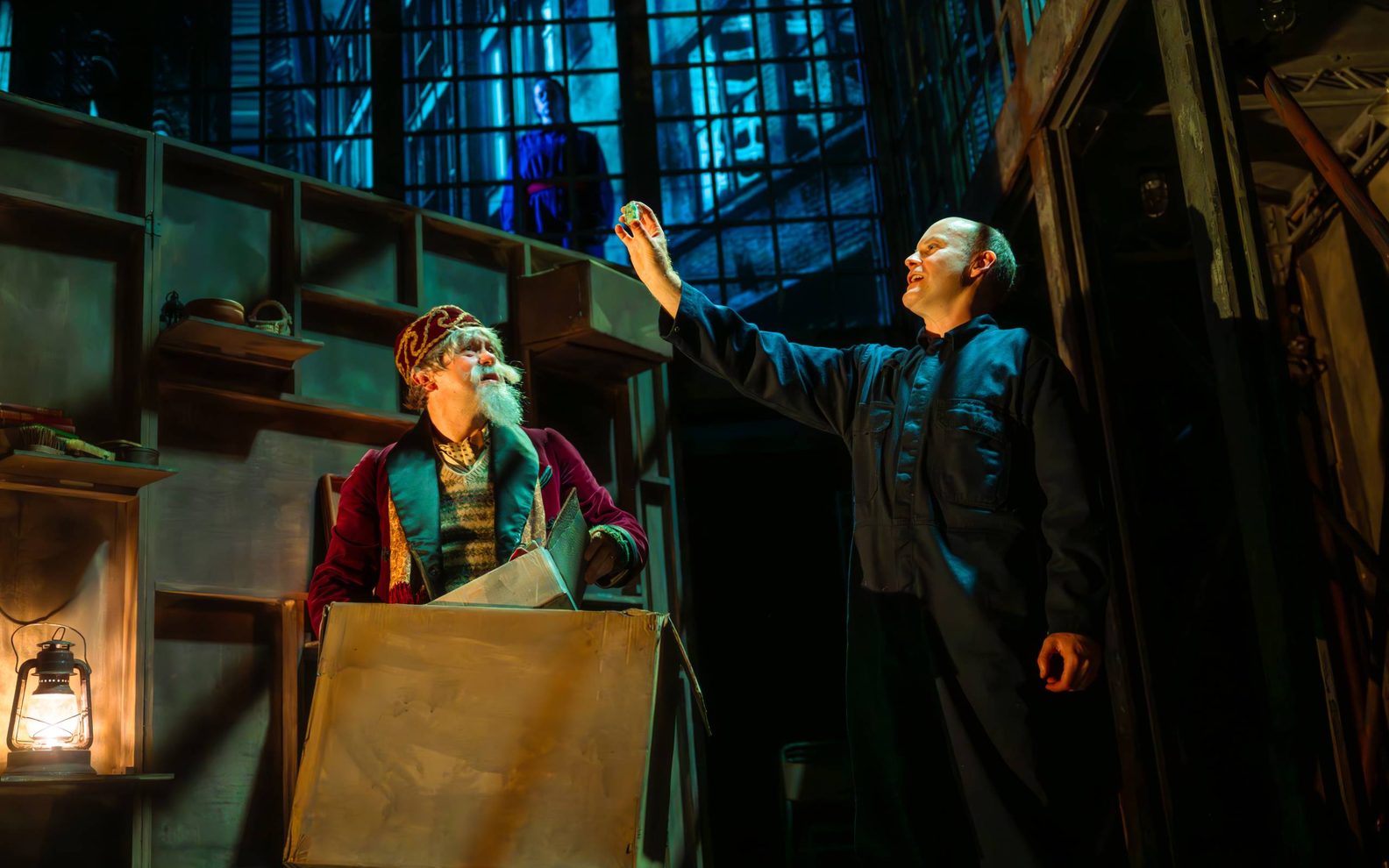
Lighting is one of the tools theatre makers use to tell a story. It isn’t just there to help us see the actors, although very important at times! It can change how we experience a whole scene. Lighting designers make choices about brightness, colour, direction, movement and shadow to create different effects. Lighting can create the atmosphere of a scene, direct the audience’s attention to a particular actor or moment, show changes in time and place, and completely change how a space feels. For example, the same set could feel warm and welcoming under soft yellow/orange lighting, but threatening and uncomfortable under harsh bright white lighting. Shadows can hide parts of the stage and make us feel like there is something we cannot see, while darkness can create mystery or tension and make an audience forget the dimensions of the space. Lighting can also make the audience feel calm, uncomfortable, watched, trapped or exposed. Even when we don’t consciously notice it, lighting is constantly helping to tell us what to look at, how to feel and what kind of world we are in.
For 1984, our lighting designer Lizzie Powell explores how light can make the audience feel like there is nowhere to escape. She reflects light off mirrors around the set, making the light feel as though it is surrounding us. Her design also plays with complete blackouts, harsh and intense lighting, and red light to create different moods and make us think about what it might feel like to live in a world where you are constantly being watched. For this production, Lizzie worked closely with Heather, our AV designer, to carefully balance the lighting and projections. At certain moments, the lighting is designed to wash out the projection at the back of the stage, creating a deliberate change in what the audience can see.

Back to 1984 education page
The 1984 education pack is here to help you dig a little deeper into 1984 and the choices behind the production. Head back to the main page to explore more.