1984 Education: Staging Dystopian Theatre
The Citizens Theatre has a long history of staging stories exploring societies that have gone wrong. But what do we mean when we say dystopian theatre?
Dystopian describes an imagined society where life is frightening, unfair or controlled. It is often a world where people have limited freedom and are prevented from making their own choices. Dystopias are usually the opposite of a Utopia, an imagined society where everything is perfect.
You might already know some dystopian stories such as The Hunger Games or The Handmaid’s Tale. George Orwell’s 1984 is another famous example. But dystopian theatre doesn’t always need to be set in the future. A production can create a dystopian world through set, costume, lighting, sound, movement and the way actors interact with the audience.
The Citizens Theatre has explored many worlds that feel oppressive. Looking back at the Citz’s history can help us think about the different ways theatre-makers can create impactful theatre.
Miracle in the Gorbals/ Michael Benthall/ 1944
Although Miracle in the Gorbals was a ballet rather than a traditional play, it is an important part of the Citizens Theatre’s history. Created during the Second World War, it presented a bleak and highly stylised version of Glasgow’s Gorbals, an area known at the time for poverty and overcrowded housing. The story follows a mysterious Stranger who arrives in the Gorbals and brings a young girl who has died back to life. His arrival has a huge impact on the community, causing people to question their beliefs, behaviour and the society around them. However, the community becomes increasingly fearful of the Stranger and eventually turns against him, killing him. The production was created as a ballet, with music by Arthur Bliss, a story by Michael Benthall and set designs by artist Edward Burra. Burra’s designs created a dark and oppressive version of the Gorbals, using towering buildings and a crowded urban landscape to make the community feel trapped and overwhelmed by its surroundings. Designer Edward Burra took inspiration from the real streets and living conditions of the Gorbals at the time. Instead of creating a realistic copy of the area, he exaggerated its architecture to create a dark, expressionistic world. The production shows us that you don’t need to invent a futuristic planet to create a dystopian world. You can start with a real place and exaggerate the things that make it feel harsh, crowded or oppressive. Miracle in the Gorbals challenged many of the traditional expectations of ballet. Edward Burra wanted to move away from the idea that ballet had to be beautiful or glamorous. Instead, he created a world that was gritty, dark and difficult to look at.
His designs reflected the harsh reality of life in the Gorbals and were intended to make audiences think about the poverty and inequality around them. Rather than simply entertaining the audience, the production acted as a warning about the conditions people were living in.
Blasted/ Sarah Kane/ 2002
Sarah Kane was a British playwright known for writing plays that explore violence, power, suffering and extreme human experiences. Her work helped shape a new style of British theatre called ‘In-Yer-Face Theatre’.
‘In-Yer-Face Theatre’ aimed to make audiences feel like they were right inside the action. Instead of watching difficult subjects from a safe distance, audiences were confronted with them through shocking language, disturbing images, violence and intense performances. Kane was also interested in dystopian worlds where people are trapped in situations of violence, fear and control. Kane has said that George Orwell’s 1984 was an important inspiration for Blasted. Both plays explore what happens when people are placed in situations where violence and power take control of their lives.
The Citizens Theatre staged Blasted in 2002, several years after the play’s first production in London. The play takes place in a hotel room. At first, the room seems like an ordinary place. But as the play continues, the world outside becomes increasingly violent, and the hotel room begins to feel like a place where the characters are trapped. The production was staged in the Circle Studio, a smaller space where the audience sat much closer to the performers than they would in a traditional theatre. Instead of watching the violence from far away, the audience was placed close to it. The production also used the theatre’s loudspeaker system to play the stage directions aloud, which could be heard in the foyer. The director Kenny Miller did this so the stage felt almost clinical or matter-of-fact. Horrific things could happen while the voice continued to describe what was happening.
The first London production in 1995 received huge negative reactions from the media. Most critics and journalists were shocked by the play’s violence and disturbing subject matter, and the production became the centre of a wider UK debate about what should be shown on stage. These debates even made their way to the House of Commons. However, when Blasted was performed at the Citizens Theatre in Glasgow in 2002, Scottish reviewers responded differently. Many Scottish critics looked beyond the shock of the violence and recognised the play as a “powerful and serious piece of theatre”, exploring war, violence and the effects of power on people. One Glaswegian audience member was asked whether the level of violence in the production had gone too far. He responded:
“Why shouldn’t I see this level of violence when so many others do in the world? Why should I cover my eyes to this when we are surrounded by war?”
This response is interesting because it connects the violence on stage to the real violence of war happening around the world.
This change in response is interesting when thinking about dystopian theatre.
Dystopian stories asks us to consider: Can a piece of theatre seem different depending on when, where and how we experience it?
This is what Dominic has to say about what makes dystopian stories so powerful on stage.
“I think fiction, whether it’s theatre or literature, really lends itself to creating dystopian worlds. It’s a feat of the imagination. I think we love that, whether it’s in the cinema or in the theatre. I think seeing science fiction in the theatre is very exciting, and we normally just think of that as something in the cinema. So, I think creating a kind of alternative world, a futuristic world, can be really thrilling!”
Design task
It’s time to become the set designer!
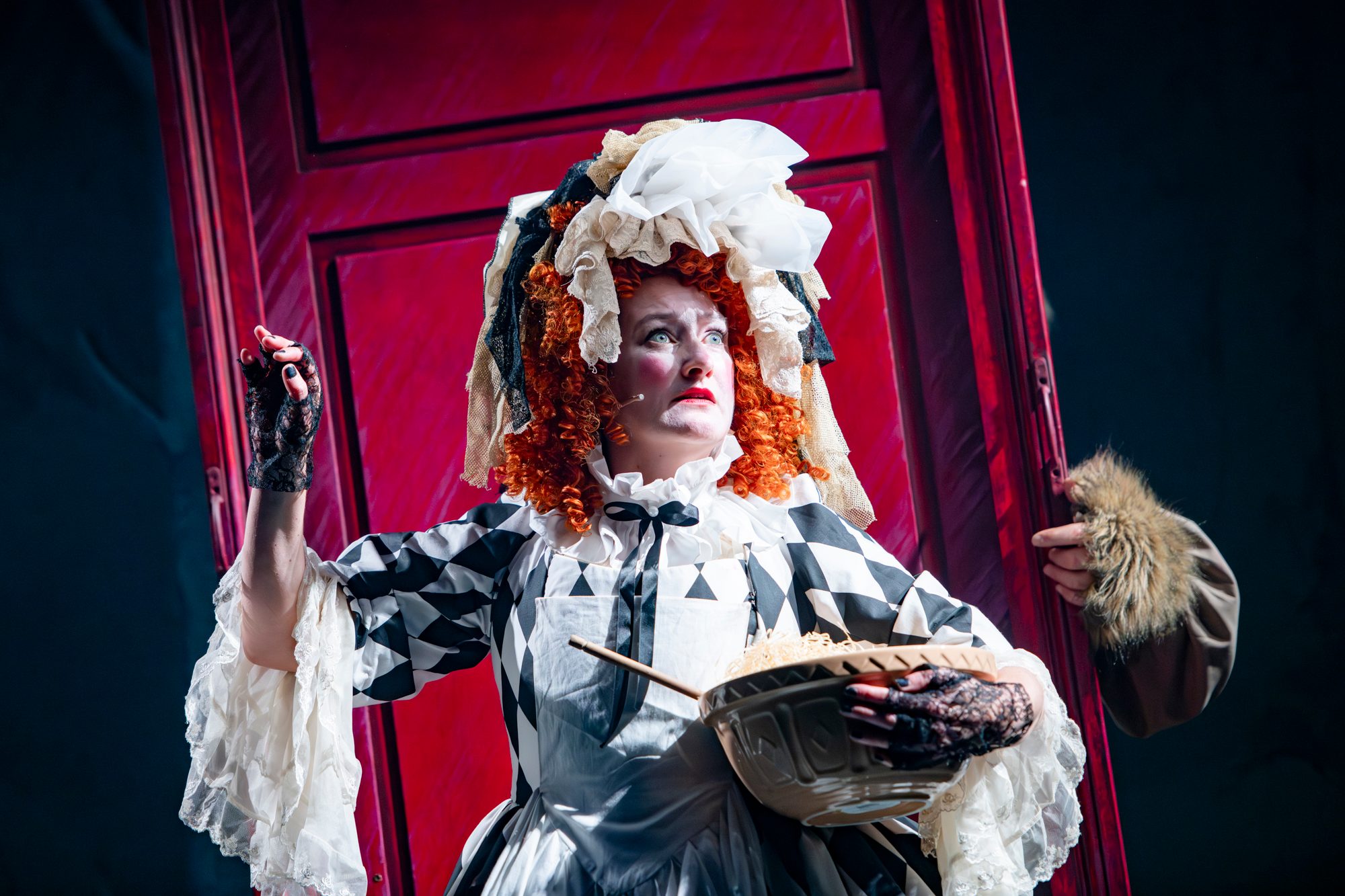
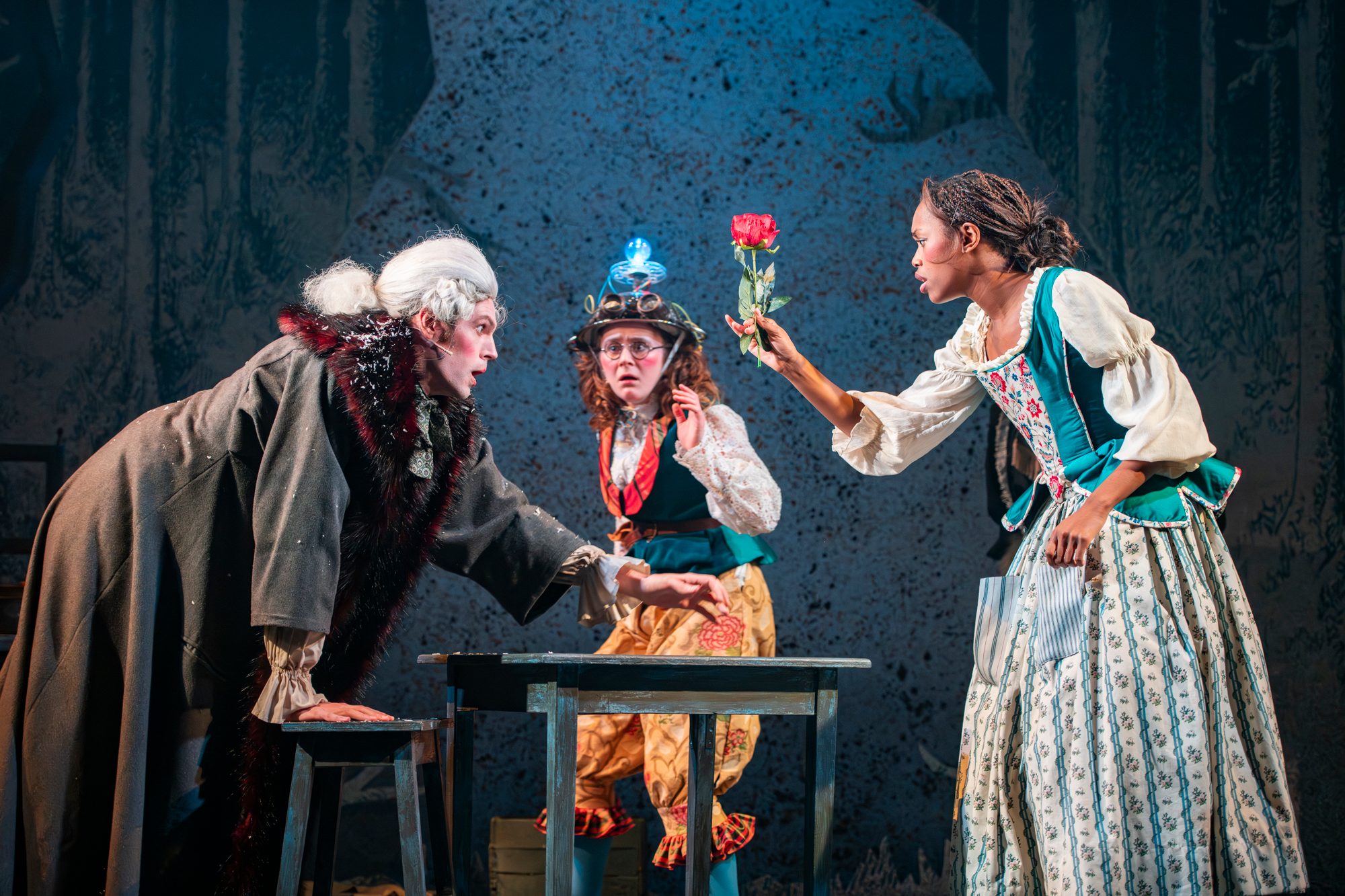
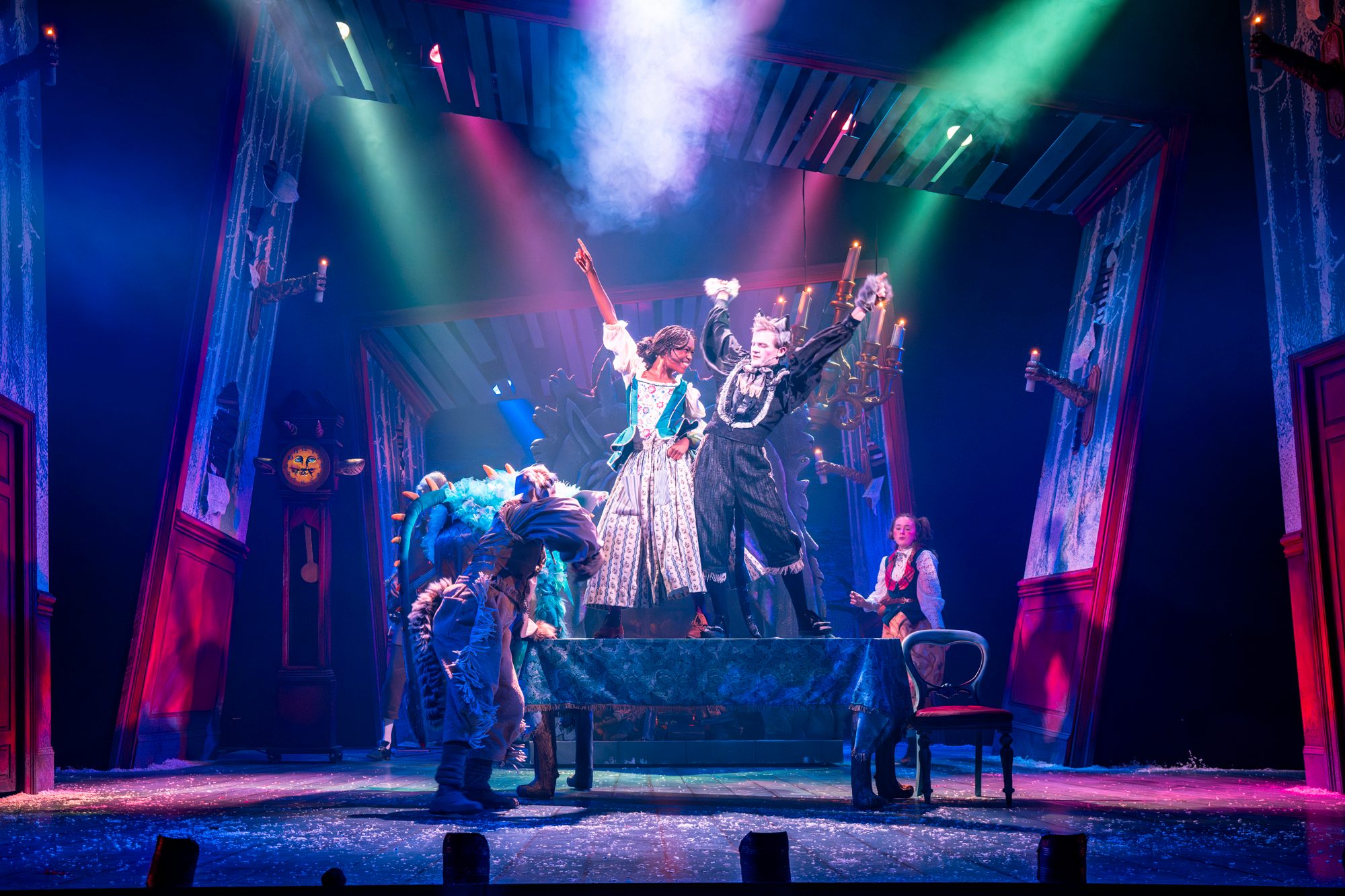
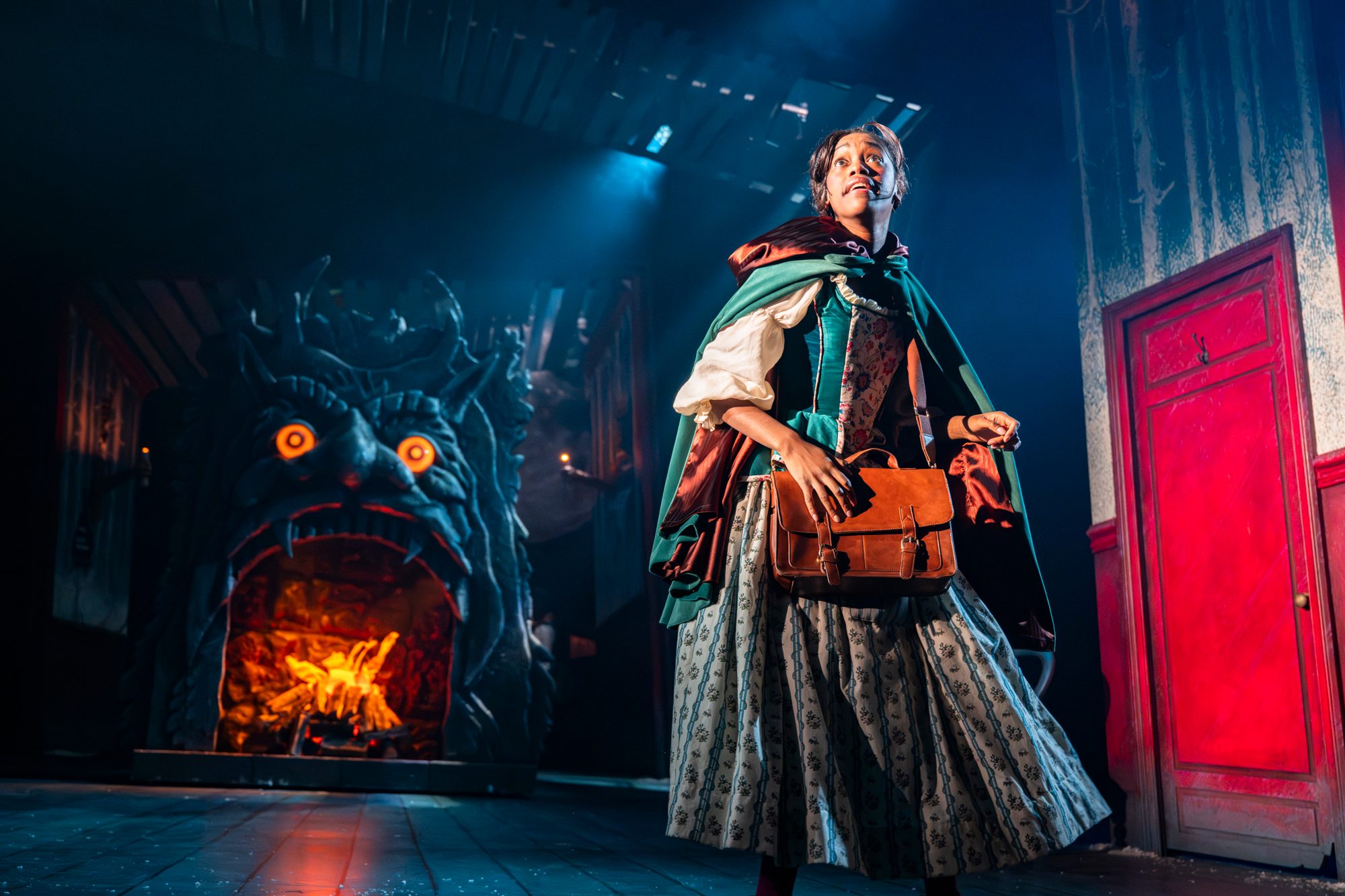
We have included photos of the Citizens Christmas show Beauty and the Beast as an example.
TASK: Create your own model box using materials you can find at home.
To get started, you’ll need a corner of cardboard to create the walls of your model box. A section of a cereal box or pizza box works well. You can also use tape to join two pieces of cardboard together.
Once you have your model box, start thinking about how you could create the world of the play using everyday materials.

Back to 1984 education page
The 1984 education pack is here to help you dig a little deeper into 1984 and the choices behind the production. Head back to the main page to explore more.