1984 Education: Timeline of a production
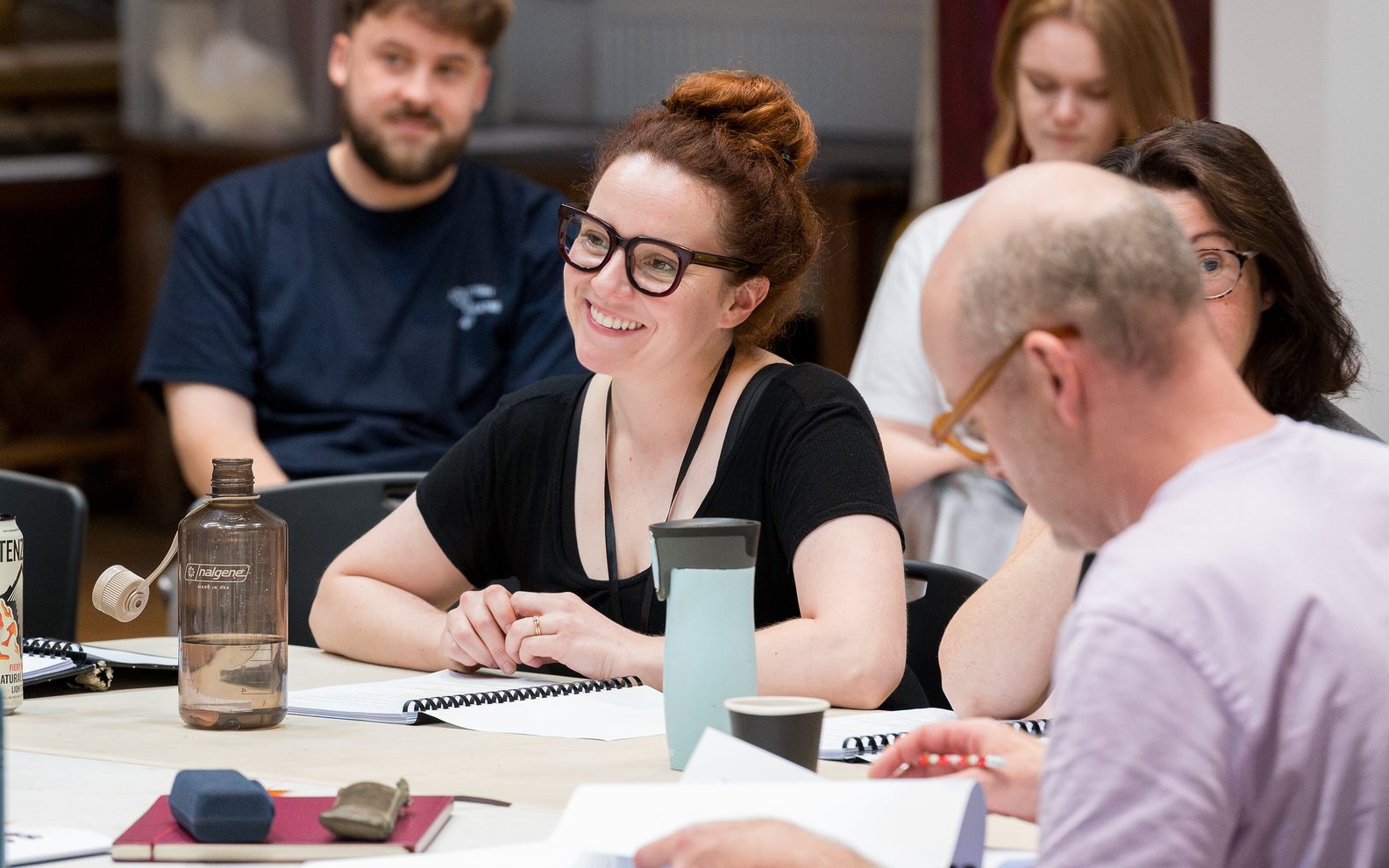
Inside the rehearsal room
Have you ever watched a show and thought, “How did this go from words on a page to what I’m watching on stage?”
We asked Ben, our Assistant Director, to take us inside the rehearsal room and show us how 1984 was made.
The production was created during an intensive five-week rehearsal period, with the company working from Monday to Saturday. However, the process started before rehearsals began. The writer developed and rewrote the adaptation from Orwell’s novel before the five weeks started, and the design team also began developing their ideas in advance. Once rehearsals began, the actors, director, designers and wider creative team worked together to test, change and develop the production. The set makers and carpenters had the five-week rehearsal period to build and realise the set, while other elements of the design were developed alongside the rehearsal process.
Timeline
DAY 1 – Table read/ Press day
The company comes together and reads the script aloud for the first time. A table read is when the actors sit together and read through the script, usually without performing it yet. This gives everyone the chance to hear the story, characters and language aloud and begin discovering the play together.
The company also takes press photographs to help promote the production.
WEEK 1 – Play/ Finding the world
The first week is about getting to know the play. The company begins exploring the characters, relationships and ideas in the script. They start asking questions about what this world looks like, how it works and what it feels like to live in it.
WEEK 2 – research and historical context
Ben introduces research and historical context, including Orwell’s experiences during the Spanish Civil War. This helps the company think about where Orwell’s ideas came from and how the world of 1984 connects to real events and political ideas. The director, Dominic, explores why we are telling this story now. The company starts asking:
What might 1984 mean to an audience today?
Which ideas in the play still feel relevant?
The physical world of the production starts to take shape. The design team shares their ideas, and the company begins to see how the set, costumes and other design elements might work together on stage.
WEEK 3 – Set, costume and props enter the rehearsal room
As rehearsals continue, more of the physical world of the production enters the rehearsal room. Costumes and props can be particularly useful when they arrive early enough for actors to work with them. This gives the actors time to discover how an object or piece of costume affects their character and the action. For example, because Jack plays George Orwell and Winston, costume becomes an important part of helping the audience understand which character they are watching.
Ben explains:
“The earlier costume and props particularly come in, the better, because then they become integrated in the action.”
At the same time, the set makers and carpenters are building the physical set, working towards the final design within the five-week production period.
WEEK 4 – Putting the pieces together
By Week 4, the company starts connecting individual scenes and seeing how they work as part of the whole show. The actors run sections of the play, often focusing on one act or group of scenes at a time. By the end of each day, they may have a rough version of a scene to look at and respond to.
Ben tells us the biggest part of the process is: TEST, CHANGE, TEST AGAIN
“An idea might look great on paper but not work when you actually try it on stage.”
The company tests ideas, sees what works, makes changes and tries again. This means the production can change a lot during rehearsals.
Ben explains: “There was a rehearsal run version of the show that was very different to what ended up there.”
So the version you see on stage isn’t simply a design or script that was decided at the beginning. It is the result of lots of testing, changing and discovering together.
WEEK 5 – Everything is coming together!
This is the week when the production moves onto the main stage, and all the different elements come together for the first time. The actors work with the finished set, costumes, props, lighting, sound and projection. But there is still lots to figure out!
Technical rehearsal
A tech rehearsal is when the company practises how all the technical and stage elements work together. The actors practise performing while the stage team learns when and how to move set pieces on and off stage. The design team will transfer over to the technical team to practise all the technical cues – e.g light cues, sound. This is led by the Stage Manager. The aim is to make sure everyone knows what happens, when it happens and who is responsible for making it happen.
Dress rehearsal
The company then performs the show from beginning to end in costume, as close as possible to how it will be performed in front of an audience. This gives everyone a chance to see how all the pieces work together and make any final changes before the first performance.
After dress and tech rehearsals, the production moves into “First Look Shows”. These are performances for the first audiences, where the company can see how the show works in front of a live audience and make any final changes.
Five weeks after entering the rehearsal room, the words on the page have become a complete production!

Back to 1984 education page
The 1984 education pack is here to help you dig a little deeper into 1984 and the choices behind the production. Head back to the main page to explore more.